Introduction
Purpose: Provide a high-level overview of Octant v2's funding model, key components, and design principles. Audience: All developers and teams exploring Octant v2 for the first time. Level: Beginner Source of truth: Core Octant v2 protocol documentation and smart contract architecture. Use this page when: You need an introduction to how Octant works, what problems it solves, and why the design choices matter. Do not use this page for: Detailed smart contract reference, implementation guides, or specific technical deep dives (see child pages for those).
Octant v2 is open public infrastructure for sustainable growth.
It uses a set of smart contracts and tooling for routing on-chain yield to projects and funding mechanisms. Users can deposit into strategy vaults or multistrategy vaults, define a donation address, and optionally run allocation rounds where a group of users or a community can help direct distributions. The donation address can itself be a split that routes value to operations, community incentives, ecosystem growth, or other recipients.
In these docs, funding vault is an umbrella term for those vault-based funding setups. It is not the name of one concrete contract class. When you need the exact deployable surface, use the specific contract terms: strategy vault, MultistrategyVault, or MultistrategyLockedVault.
How Octant differs from a normal yield vault
In a conventional yield vault, depositors receive a share of the yield their assets generate. In Octant, yield is redirected to a configured donation address instead, while depositors retain access to their principal. This design allows depositors to support causes they care about while preserving their capital — they contribute only the yield their money generates, not the principal itself.
Core components
- Strategy vaults: single-strategy ERC-4626 deposit surfaces built on Octant’s strategy framework.
- Multistrategy vaults: ERC-4626 allocator vaults that sit above several strategies and manage capital allocation across them.
- Routing & Splitting Contracts: infrastructure for programmatic yield distribution to multiple recipients.
- Allocation Mechanisms: smart contracts implementing various fund allocation models, such as quadratic funding or quadratic voting.
- Community Staking Contracts (optional): token-staking mechanisms for governance participation and reward distribution.
Treasury managers determine capital allocation, select yield-generating strategies in line with their risk profiles, and configure automatic yield splits between predefined recipients. Optionally, they can enable community participation where eligible participants influence the allocation of an earmarked portion of the yield using a selected model.
Key Properties and Design Principles
- Capital Preservation: Octant v2 separates principal management from yield routing. The principal is not distributed, only generated returns flow to funding mechanisms.
- Credible Neutrality: The protocol does not prescribe what to fund, it standardizes how to fund via configurable splits and allocation mechanisms.
- Sustainability: Yield-based funding enables continuous streams without depleting reserves.
- Standards and Composability: Uses ERC-4626, supports Safe multisig treasuries, and interoperates with common DeFi primitives such as Aave, Morpho, and Sky Compounder.
- Capital-efficiency: The system is optimized to maximize the utility of capital by capturing otherwise idle or wasted value and redirecting it toward funding pools.
- Cost-efficiency and Automation: Wherever possible, execution is automated to reduce manual intervention, errors, and trust requirements.
- Security: Vaults follow Yearn v3-style patterns and have undergone additional security audits. Strategies have configurable exposure limits.
- Trust minimized: All parties should be able to use the system and reach consensus without relying on a trusted third party, except when admin functionality is necessary and controlled by a trusted team for upgrades or parameter setup.
How it works
Octant v2 acts as a decentralized funding network that transforms deployed assets into sustainable funding streams for projects, communities, and operational needs. At its core, it works as a pipeline: users deposit assets into an Octant vault, a strategy generates yield, and that yield is redirected into a funding stream that supports downstream recipients.
There are two common upstream shapes:
- Standalone strategy vault — users deposit directly into one strategy vault.
- Multistrategy vault — users deposit into a vault that allocates capital across several attached strategies.
In both cases, yield is routed to a donation address instead of being retained by depositors. This approach is designed so that users keep their principal accessible while contributing only the yield their assets generate, enabling long-term impact without donating principal directly. Principal preservation is a design goal, not a guarantee: strategy losses that exceed the donation-address share buffer can reduce depositor value.
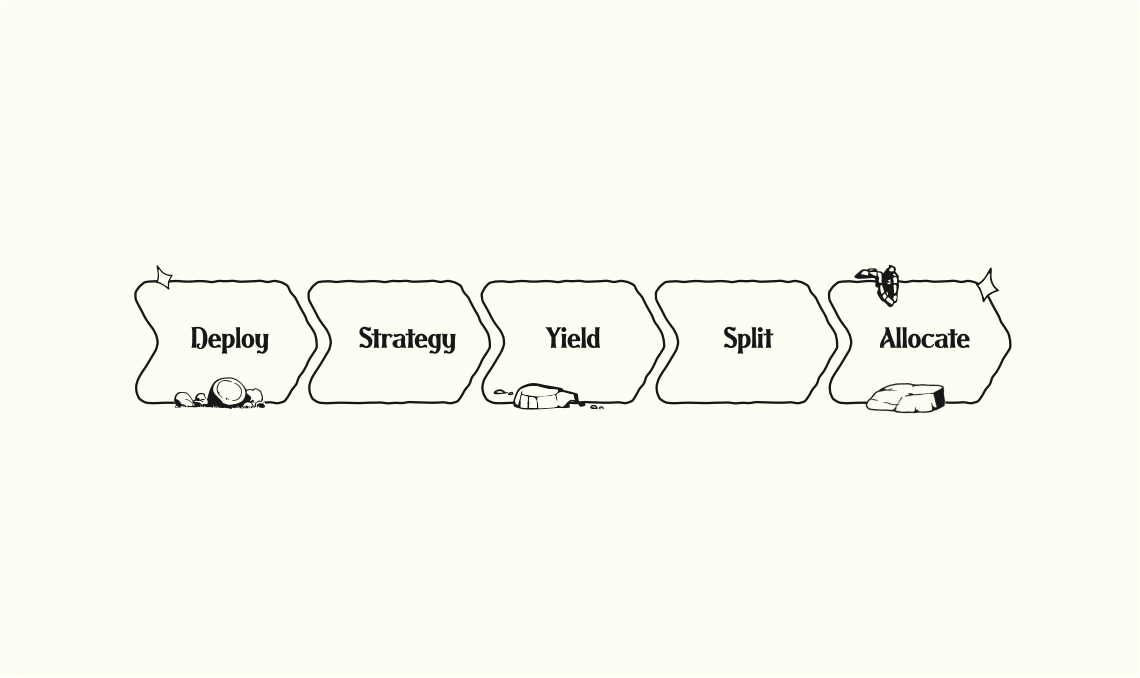
The system’s core building blocks are the vault layer and the strategy layer. A strategy vault handles one asset and one yield logic path. A multistrategy vault handles deposits, withdrawals, queue policy, and debt allocation across several strategies.
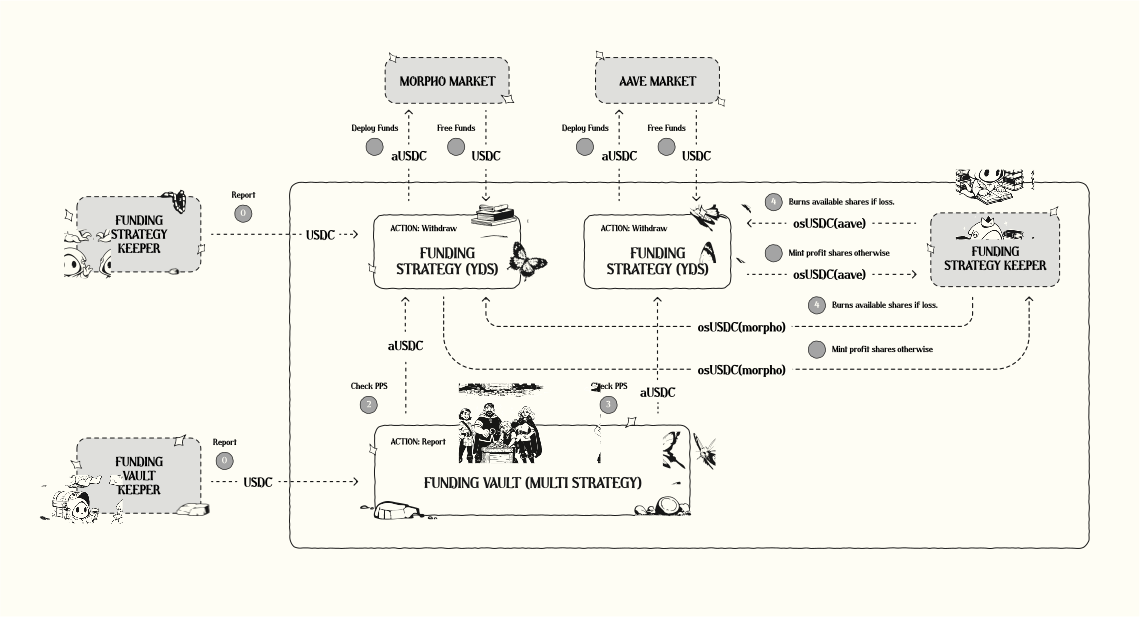
After users deposit, they receive ERC-4626 shares representing their principal-side claim on the vault they entered. When a strategy generates profit, the system mints new shares that represent donated yield and sends them to the configured donation address rather than to the user.
The donation address can be a payment splitter that distributes those shares to a range of recipients. That distribution can be direct, or routed through allocation mechanisms such as quadratic funding, quadratic voting, or other customizable funding rounds.
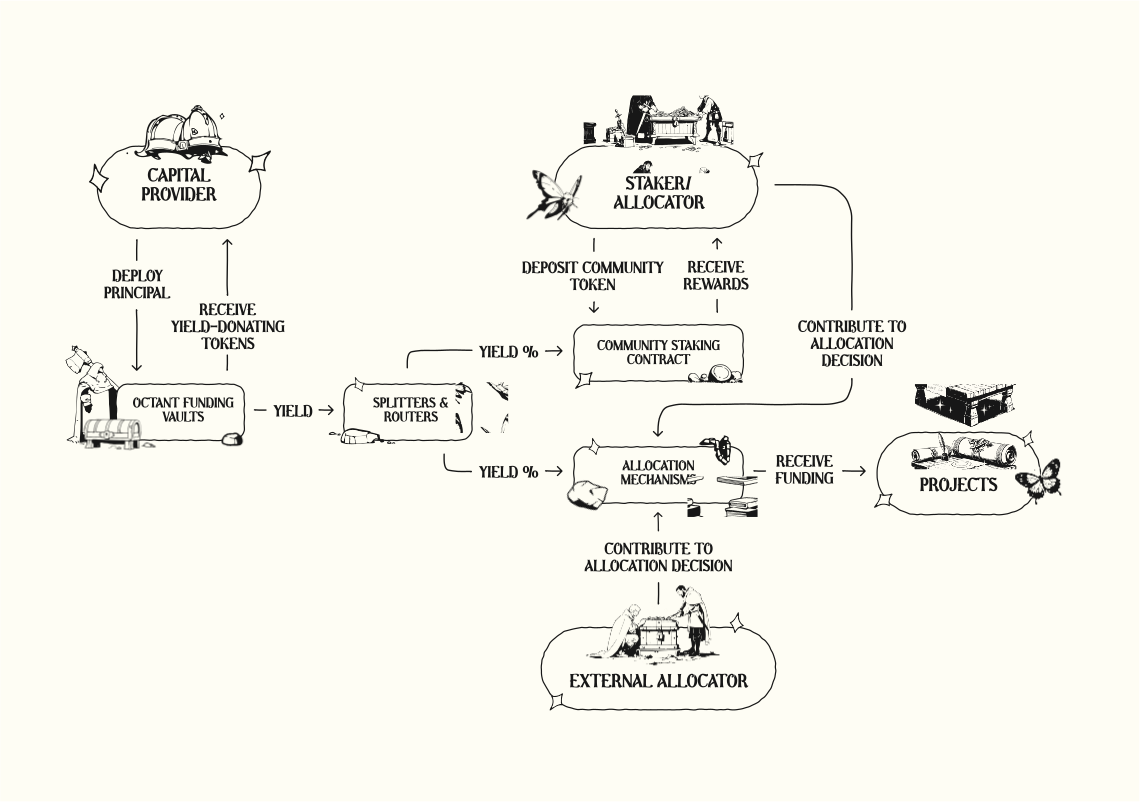
A key difference between Octant and traditional ERC-4626 vaults lies in how yield is treated. In most vaults, yield accrues to the depositor’s balance. Octant instead diverts the yield to funding purposes.
For example, a USDC strategy vault may run one external integration to generate yield, while a multistrategy vault may allocate USDC across several attached strategies and aggregate them behind a single deposit surface. In either case, whenever profit is realized, a network participant called a keeper triggers a report, and the newly created shares are directed to the donation address for further distribution to designated recipients.
By separating principal from yield, Octant v2 enables a sustainable, long-term funding model that empowers communities to support open-source development, public goods, and other impactful initiatives. Its design allows for flexible allocation methods and prioritizes keeping the PPS (price-per-share) ratio close to one-to-one during normal profit cycles. When strategy losses exceed the buffer held by the donation address, depositor PPS can fall. See Security & Risk below.
Security & Risk for Users
- Smart Contract Risk: While Octant built contracts based on the audited Yearn v3 patterns and ERC-4626 standards, new contracts may have undiscovered vulnerabilities. Always verify contract addresses on official channels.
- Strategy Risk: Direct strategies such as ETH staking or Aave integrations may face protocol risks, liquidation events, or unexpected governance changes.
- Impermanent Loss: If a strategy involves LP tokens, price fluctuations may lead to impermanent loss.
- Principal Loss: Principal preservation is a design goal, not a contract guarantee. In a Yield Donating Strategy, realized profits are first minted as donation-address shares and any losses burn those shares as a buffer. Losses that exceed the buffer, or configurations where burning is disabled, reduce depositor PPS. Yield Skimming Strategies carry analogous risks tied to the underlying exchange rate. Always review the health check parameters and the underlying protocol’s risk profile before deploying capital.
Read the full disclaimer here.
Source code
The smart contracts that implement this system are published at golemfoundation/octant-v2-core. These docs are anchored to the pinned commit [email protected].